
WaveAssist
Published on: Apr 24, 2026
AI agents that emit structure beat AI agents that emit pixels. Claude Design made the industry thesis unmissable: editable artifacts win, regenerated slop loses. Here's what that means for how real AI agent platforms get built.
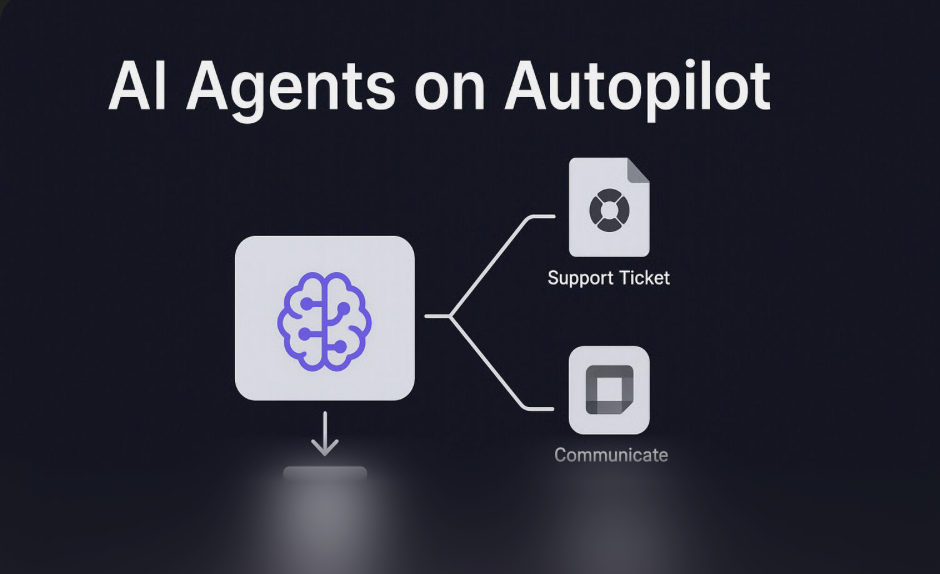
On April 17, 2026, Anthropic launched Claude Design. It looked like a slide-deck tool. It was actually the clearest statement of a thesis the whole industry has quietly converged on:
Emit structure, not pixels.
Understanding why that matters tells you why most "AI agents" don't work, and why the ones that do, do.
GPT and Gemini generate images as pixels. Fine for a mountain photo. Useless for a mountain banner, because the moment you want to change one word of the tagline, you regenerate the whole image and get something different.
The logo is mangled. The text is hallucinated glyphs. The model's idea of "same image, new caption" is a new image. You can't nudge a painting.
That's slop: excellent-looking, unusable.
The uncomfortable part is that most "AI agent" output has the same shape. It looks great on first generation. It's un-editable. To change anything, you regenerate. And the regeneration is a lottery.
Claude Design's trick wasn't a bigger model. It was a different artifact.
The LLM still writes. But it writes HTML (and Skills-backed templates, powered by Opus 4.7). The HTML renders into slides, documents, interfaces.
Want to change a word? Change a string, re-render. Everything else is identical.
The intelligence happens once, when the structure gets written. After that, the artifact behaves like code, because it is code.
Claude Design didn't invent this. It named it. Look at what else shipped in the last 18 months:
SKILL.md folders. Instructions, scripts, resources. Loaded dynamically, executed deterministically.The industry has quietly agreed: the artifact has to be structured to be useful.
Pixels are the demo. Structure is the product.
This is the part most teams miss.
A chatbot that "helps you review PRs" is the pixel version of an agent. Impressive output. Nothing reusable. Regenerated from scratch every time you ask. You can't diff what it did last week against what it did this week. You can't audit its policy. You can't fix one behavior without breaking three others.
A GitZoid pipeline that runs every Monday and writes a deterministic review with the same schema is the HTML version of an agent. Editable. Composable. Trustable. You can open the pipeline, change a prompt, re-run, and get a predictable delta. You can point it at a new repo. You can fork it.
Same intelligence. Different shape.
One is slop. One is value.
This is also the bet behind GitDigest, SentimentRadar, WavePredict, and every other agent on WaveAssist. The LLM contributes structure at build time. The pipeline runs forever after.
Every AI product is about to face the same choice Claude Design faced.
Emit frozen artifacts users regenerate and hope.
Or emit structured artifacts users edit and compose.
We picked the second one two years ago. The industry is catching up.
→ Build structured AI agents on WaveAssist. Deterministic pipelines, editable workflows, deployed in minutes.
Browse production-ready AI agents you can launch in one click.
Explore AI AssistantsPick a deterministic AI agent, configure it once, and let it run on schedule, forever. $2 in starter credits, no credit card needed.


